In healthcare, patient care begins the moment someone walks through the front doors. A clinical environment must do more than look clean; it must meet rigorous compliance standards to prevent Healthcare-Associated Infections (HAIs). Managing the sanitation of medical waiting rooms requires expert understanding of cross-contamination prevention, terminal cleaning protocols, and — a point most janitorial vendors miss entirely — patient privacy law.
The Capital Region’s outpatient footprint has expanded dramatically. Medical office buildings in Fairfax, Arlington, Alexandria, Bethesda, Rockville, and Silver Spring now handle volumes that would once have been hospital-based. Ambulatory surgery centers, urgent care networks, specialty practices, and imaging centers all carry hospital-grade infection control obligations without hospital-grade environmental services departments behind them. That gap is where your cleaning partner either protects you or exposes you.
First Impressions and Patient Trust
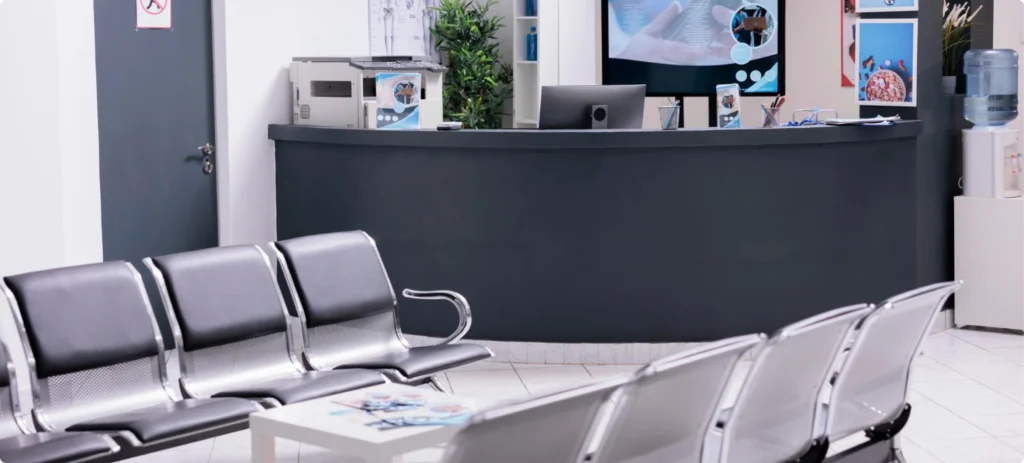
A patient entering a clinic is often already anxious. Stained carpets, dusty seating, or overflowing trash bins immediately erode confidence in the care they are about to receive. A spotless, fresh-smelling waiting room communicates professionalism, safety, and respect for patient well-being.
This is now measurable in a way it was not a decade ago. Patients review practices publicly, and cleanliness appears in negative reviews far more often than clinical outcomes do — because it is the one thing every patient feels qualified to judge. For a practice competing for referrals in a saturated suburban market, the waiting room is a marketing asset that operates twelve hours a day.
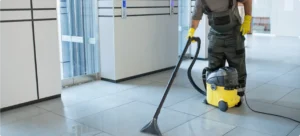
Pay particular attention to the surfaces that photograph badly: carpet edges at the reception desk, the corners behind waiting room chairs, ceiling vent diffusers, and the tops of door frames. These are the details that signal to an observant patient whether cleaning here is thorough or performative.
Strict Cross-Contamination Prevention
The golden rule of medical facility cleaning is ensuring pathogens from one area never travel to another. This is achieved through a strict, color-coded microfiber system. A red cloth used in a restroom is never brought into a waiting area; a blue cloth used in reception never enters a clinical exam room.
A functioning system requires three things beyond the color scheme itself:
- One cloth, one surface, one direction. Folding and reusing a cloth across multiple surfaces defeats the entire method.
- Laundered, not rinsed. Microfiber must be commercially laundered without fabric softener, which clogs the fibers and destroys their capture ability.
- Documented training. Every technician should be able to explain the color scheme without prompting. If they cannot, the system exists on paper only.
Extend the same discipline to equipment. Mop heads, vacuum attachments, and cleaning caddies should be zone-specific, and carts should never cross from a soiled utility area into a patient-facing space without decontamination.
Terminal Cleaning Protocols
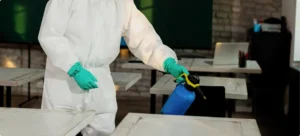
Medical waiting rooms experience constant foot traffic from sick individuals, making standard cleaning chemicals insufficient. Professional medical cleaners utilize EPA-registered, hospital-grade disinfectants with documented efficacy claims against the pathogens that actually circulate in your patient population — influenza, norovirus, RSV, and C. difficile among them.
High-touch surfaces requiring frequent, methodical disinfection with proper dwell times:
- Check-in kiosks, tablets, clipboards, and pens
- Chair armrests and the backs of chairs where patients grip while standing
- Door handles, push plates, and the interior of restroom doors
- Children’s play areas — including every individual toy, which should be non-porous and washable
- Water dispensers, magazine racks, and reception counter surfaces
Furniture selection matters more than most practices realize. Porous fabric upholstery cannot be terminally disinfected. Specifying non-porous, bleach-cleanable vinyl or coated textiles at the point of purchase makes compliant cleaning possible for the next ten years.
For verification, ATP luminometer testing provides an objective, numeric cleanliness reading on a surface in seconds. It is inexpensive, it is defensible in an audit, and it immediately reveals which surfaces your program is actually missing.
The HIPAA Dimension Most Vendors Overlook
Cleaning crews work unsupervised, after hours, in spaces where protected health information is present. Charts left on a counter, a monitor left unlocked, an appointment schedule visible on a whiteboard, discarded paperwork in a general waste bin — every one of these is an exposure point.
Your cleaning provider should be able to demonstrate:
- Documented HIPAA awareness training for every technician assigned to your site
- Signed confidentiality agreements, and a Business Associate Agreement where your counsel determines one is warranted
- A clear “do not touch, do not read, do not move” policy for any document or screen containing patient information
- Correct waste segregation — general waste, regulated medical waste, and confidential document destruction are three separate streams, and a technician who consolidates them creates a reportable breach
- Background-checked, stable crews rather than rotating subcontracted labor with unknown vetting
Ask directly. A vendor who has never been asked this question before has never worked in a compliant healthcare environment.
Staying Audit-Ready
Healthcare facilities are subject to strict regulatory oversight. Your janitorial team must clean for compliance, not just aesthetics. Maintain:
- Signed and dated cleaning logs by room and by shift
- Safety Data Sheets for every chemical on site, accessible within seconds
- Documented OSHA Bloodborne Pathogens Standard training for all technicians
- A written spill and exposure response procedure, including sharps discovery
- Records of dwell-time compliance and product registration numbers
Accreditation surveys and health board inspections arrive with little warning. A facility that maintains documentation continuously never has to scramble; a facility that reconstructs it retroactively is already in trouble.
Delivering an elevated patient experience requires a commercial cleaning partner who understands the stakes. Beeyond Facility Services implements clinical-grade cleaning strategies for medical offices, urgent care centers, and specialty practices throughout Northern Virginia, Washington D.C., and Suburban Maryland — keeping facilities impeccable, compliant, and audit-ready from the lobby to the exam room.